
The History of Demonology and the Church is a comprehensive scholarly series tracing how the people of God have understood, confronted, and articulated the reality of spiritual evil—from the ancient Near Eastern world and the biblical canon to the modern church’s fractured and contested landscape.
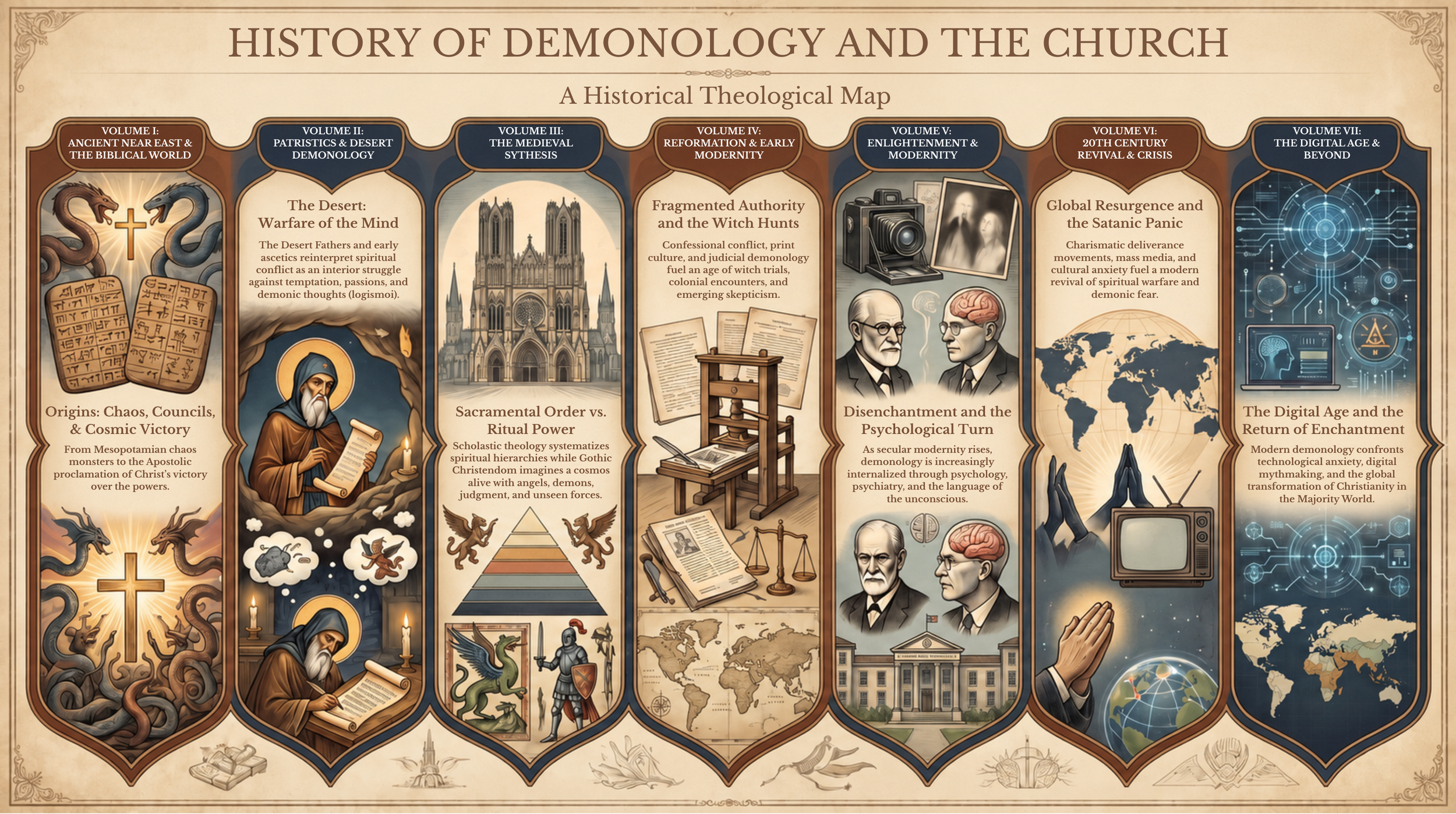
Why Study Demonology in the History of the Church?
For much of Christian history, belief in spiritual powers—both holy and hostile—was assumed rather than debated. Angels and demons belonged to the shared grammar of Scripture, theology, and pastoral care. Only in the modern era did the demonic become either marginalized as superstition or sensationalized as spectacle.
This series exists to recover historical clarity. It does not seek to provoke fear, encourage fixation, or revive speculative excess. Instead, it examines how the Church has historically named, interpreted, disciplined, and sometimes misunderstood the reality of evil spiritual powers—and how those interpretations shaped doctrine, worship, pastoral practice, and culture.
By returning to primary sources across eras, History of Demonology and the Church aims to restore theological sobriety: neither denial nor obsession, but discernment rooted in history, Scripture, and the lived experience of the Church.
The Multi-Volume Architecture
Each volume stands alone while contributing to a unified historical and theological narrative.
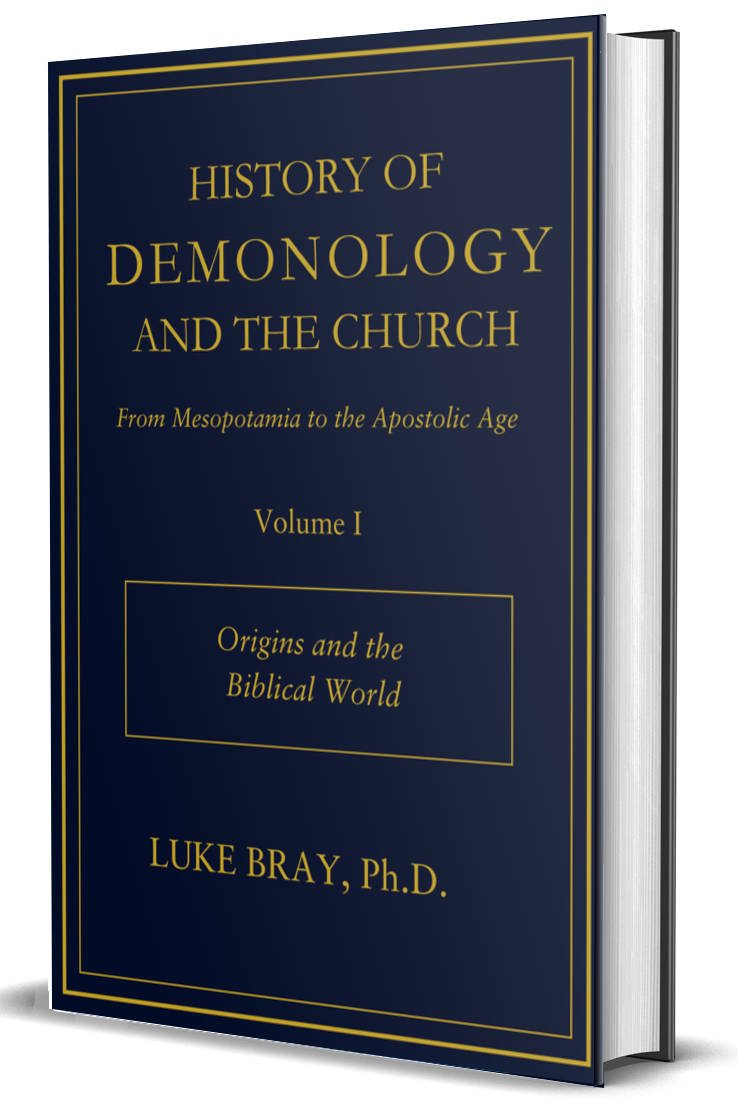
Volume I — Origins and the Biblical World
From Mesopotamia to the Apostolic Age
Volume I traces the development of demonological thought from the ancient civilizations of Mesopotamia and the Near East through Israel, Second Temple Judaism, and the world of the New Testament. It explores how ideas of chaos, spiritual beings, evil, and divine authority developed before reaching their decisive Christian expression in Jesus’ confrontation with the powers and the apostolic proclamation of Christ’s victory.
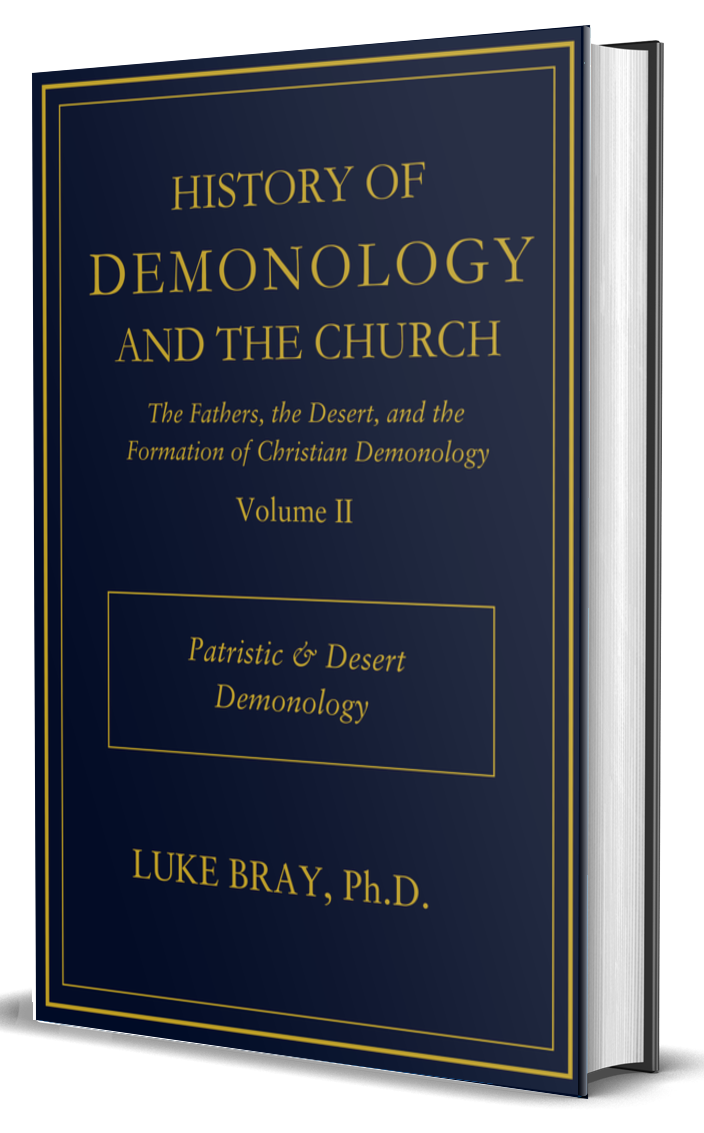
Volume II — Patristic and Desert Demonology
The Fathers, the Desert, and the Formation of Christian Demonology
Volume II follows demonology from the post-apostolic Church into the great patristic and monastic traditions of the first six centuries. Martyrdom, apologetics, ascetic practice, exorcism, and the Desert Fathers gradually form a distinctly Christian understanding of spiritual conflict, temptation, discernment, and the authority of the Church.
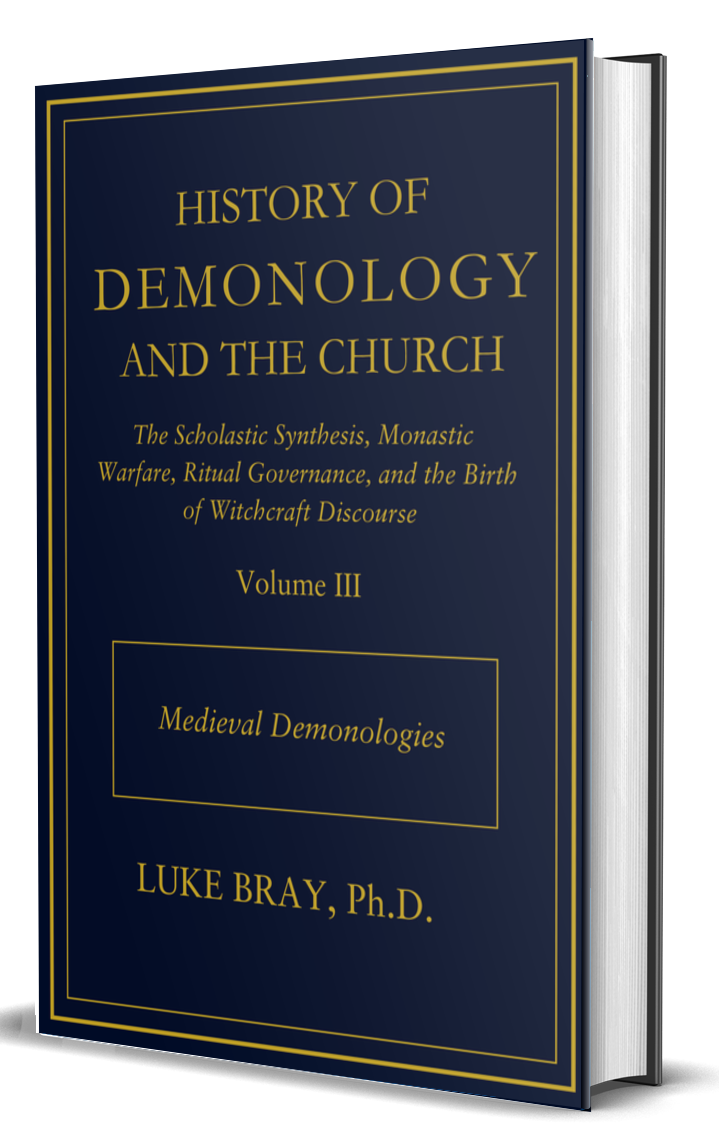
Volume III – Medieval Demonologies
The Scholastic Synthesis, Ritual Governance, and the Seeds of Witchcraft
Volume III examines the medieval synthesis of demonology across monastic discipline, scholastic theology, popular religion, and ecclesial law. Angels and demons are systematized philosophically, ritual authority is formalized, and spiritual conflict becomes embedded in sacramental, legal, and social structures. The volume traces how this ordered cosmos gradually fractures, laying the groundwork for late medieval anxiety and early modern witchcraft discourse.
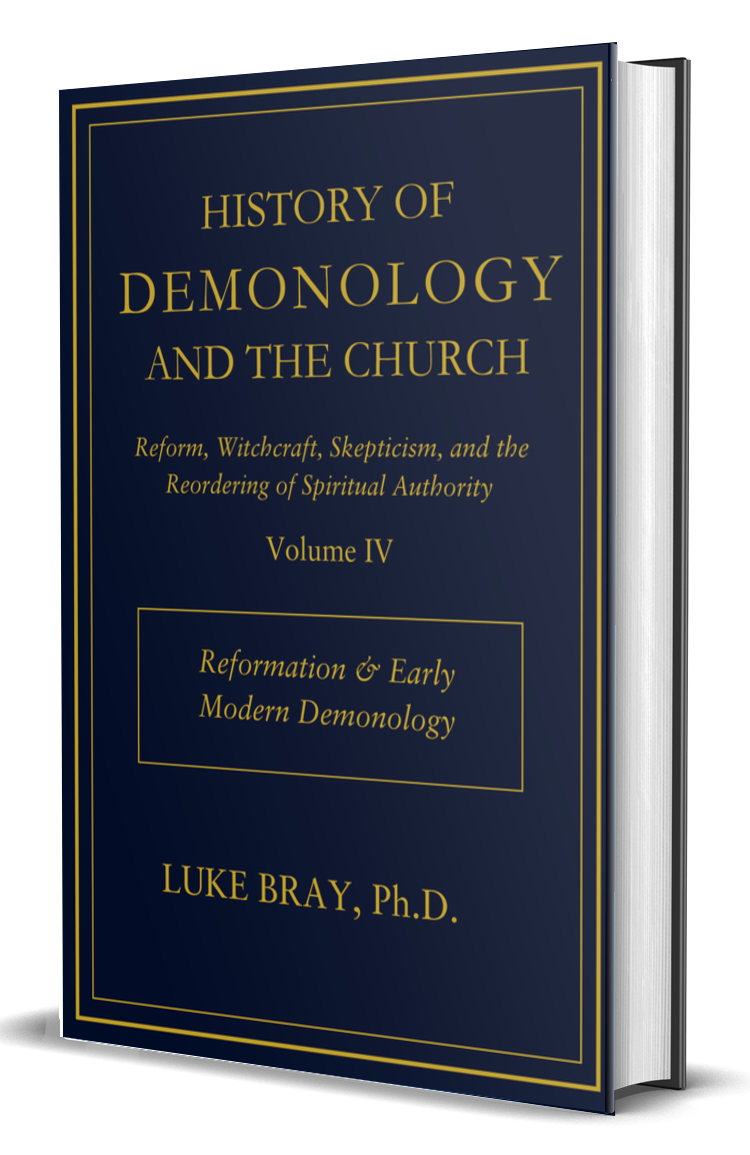
Volume IV — Reformation & Early Modern Demonology
Reform, Witchcraft, Skepticism, and Spiritual Authority
Volume IV follows the violent reordering of demonology during the Reformation and early modern period, as Scripture, sacrament, law, medicine, and reason compete for authority over the invisible world. It analyzes witchcraft theory, possession cases, missionary encounters, and the rise of skepticism alongside confessional conflict. This volume reveals how demonology became a crucible for questions of power, gender, knowledge, and truth in a fractured Christendom.
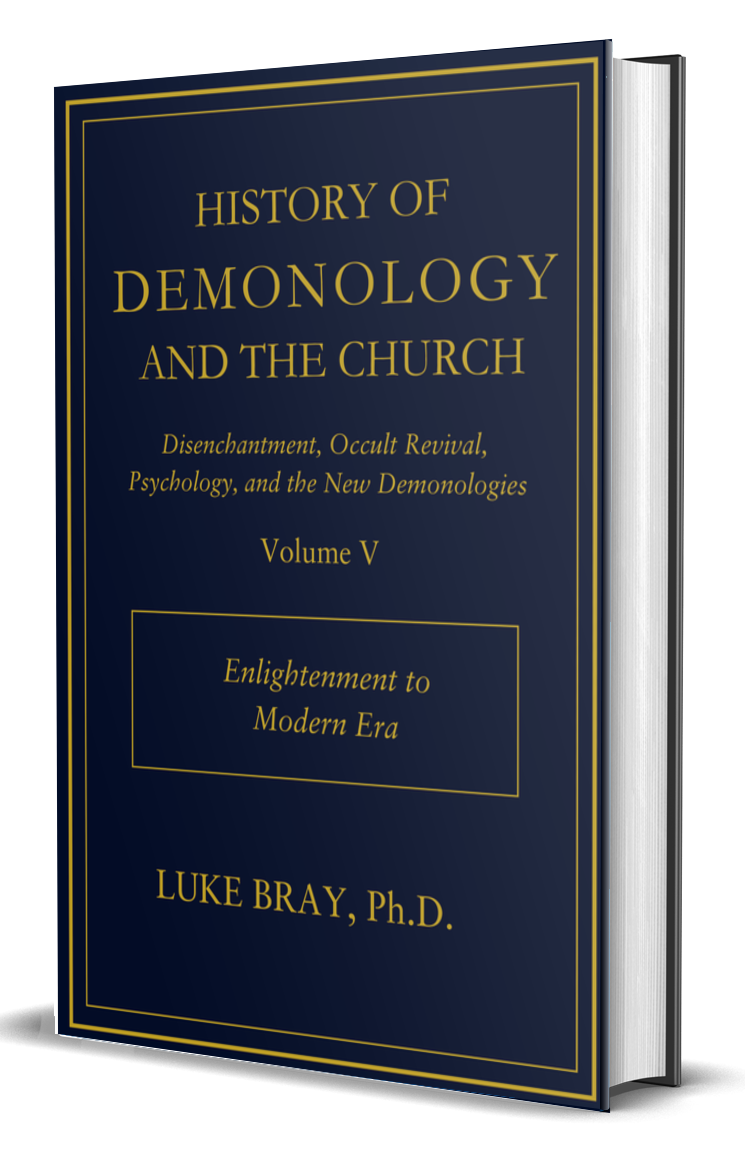
Volume V – Enlightenment to the Modern Era
Disenchantment, Occult Revival, Psychology, and the Modern Imagination
Volume V charts the apparent decline—and unexpected transformation—of demonology in the modern age. As Enlightenment rationalism, psychology, and psychiatry reclassified spiritual affliction, alternative supernatural systems emerged through occult revivals, spiritism, literature, and popular media. The demonic retreats from doctrine into the imagination, the psyche, and cultural narrative—never disappearing, only changing form.
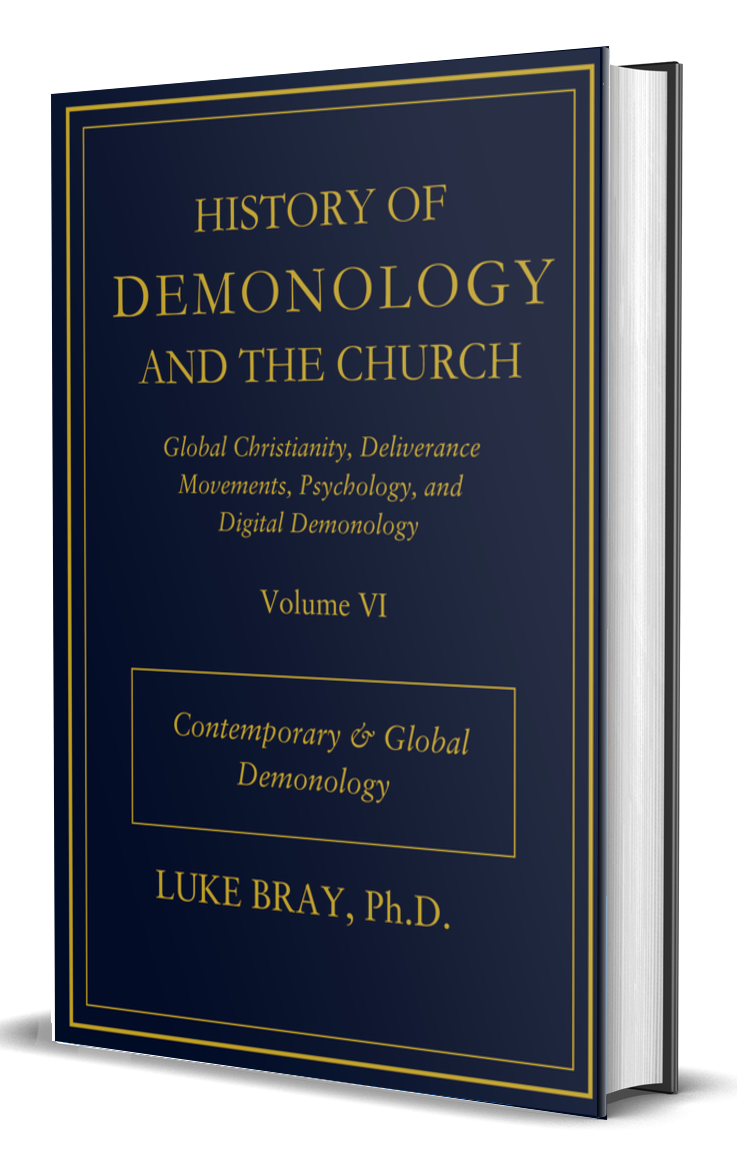
Volume VI – Contemporary & Global Demonology
Global Christianity, Deliverance Movements, and the Digital Age
Volume VI examines the global resurgence of demonological language and practice in a secular yet spiritually volatile world. Drawing on Pentecostal and charismatic movements, Global South theologies, psychology, neuroscience, and digital culture, it analyzes how the powers are named, resisted, and sometimes misinterpreted today. The volume concludes by proposing a disciplined, Christ-centered theology of discernment for the contemporary Church.
Methodology and Scholarly Commitments
History of Demonology and the Church is written with a single aim: to treat the subject with historical sobriety—neither dismissal nor sensationalism. Each volume is grounded in primary sources and interpreted within its own cultural and theological context, so the reader can see how Christian demonology developed across time rather than importing modern assumptions into ancient texts.
Guiding commitments:
Primary sources first — Scripture, patristic corpora, liturgical texts, conciliar materials, legal documents, and historical records
Context over anachronism — beliefs and practices are analyzed inside their own world, not judged by later categories
Disciplined definitions — clear distinctions between doctrine, speculation, pastoral practice, and popular religion
Comparative awareness — Jewish, Greco-Roman, and Islamic materials are engaged where they illuminate the historical record
Transparent documentation — rigorous citations, careful translation notes, and traceable claims
The goal is not novelty, but clarity: to trace continuity, rupture, and development with intellectual honesty and theological responsibility.

The HDC Vault: A Living Research Archive
Behind History of Demonology and the Church stands the HDC Vault—a curated, indexed research archive developed to support long-form historical and theological scholarship. The Vault contains thousands of primary and secondary sources spanning the ancient Near East, the biblical world, patristic literature, medieval theology, early modern demonology, and contemporary global studies.
More than a personal library, the HDC Vault functions as a private research institute. It undergirds the writing of each volume, informs academic lectures and seminar teaching, and supplies source material for related podcast and publishing projects. Every argument, synthesis, and historical claim in the series is anchored in this archive, ensuring depth, traceability, and long-term scholarly reliability.
Published under Stratias Press
The History of Demonology and the Church
Copyright © 2025 Stratias Press
All rights reserved.